The Go Story of Gerardo Marroquin in El Salvador
When people talk about Go, they often picture ancient temples in Kyoto, quiet tea houses in Seoul, or bustling clubs in Beijing. Rarely does anyone imagine the game taking root in a small Central American nation better known for volcanoes, surf beaches, and pupusas. Yet this is exactly where Gerardo Marroquin’s story unfolds—a story of curiosity, coincidence, and a quiet determination that would eventually plant the seeds of Go culture in El Salvador.
Gerardo first encountered Go at around thirteen years old, not through a teacher or a club, but through the pages of Weekly Shonen Jump. Inside was the manga Hikaru no Go, a series that introduced countless young readers around the world to the spirit and mystery of the game. He couldn’t play, not yet—not a rule, not a shape, not even how the stones were supposed to be captured. But something about Go stayed with him. It felt ancient, elegant, and strangely intimidating, a beautiful puzzle he admired from afar. For years, his relationship with Go was simply this: fascination without entry.
Life moved forward. Go stayed in the background—until a business trip changed everything.
In 2023, Gerardo traveled to South Korea for work. While wandering through a Daiso store, he saw it: a Go set, priced at just five dollars. It didn’t matter that he still didn’t know how to play. Holding that board felt like a first step he had been waiting more than a decade to take. He bought it with excitement—and then realized he needed a way to learn.
Searching online led him to the International Go Federation. But there was a surprise waiting: El Salvador wasn’t listed. Neighboring countries—Guatemala and Costa Rica—were there, but his homeland was absent. So he reached out with a simple Facebook message.
The first reply came from Costa Rica.
Their response was full of enthusiasm—someone in El Salvador wanted to learn Go! Encouraged, Gerardo began sharing the game with friends. Most were curious but not committed. Yet one friend, Diego, agreed to try. Their first match wasn’t played on a wooden board, but on a printed 9×9 paper grid. The game was messy, chaotic, and full of mistakes—but it was real. It was their first true game.
From that moment, things began to grow.
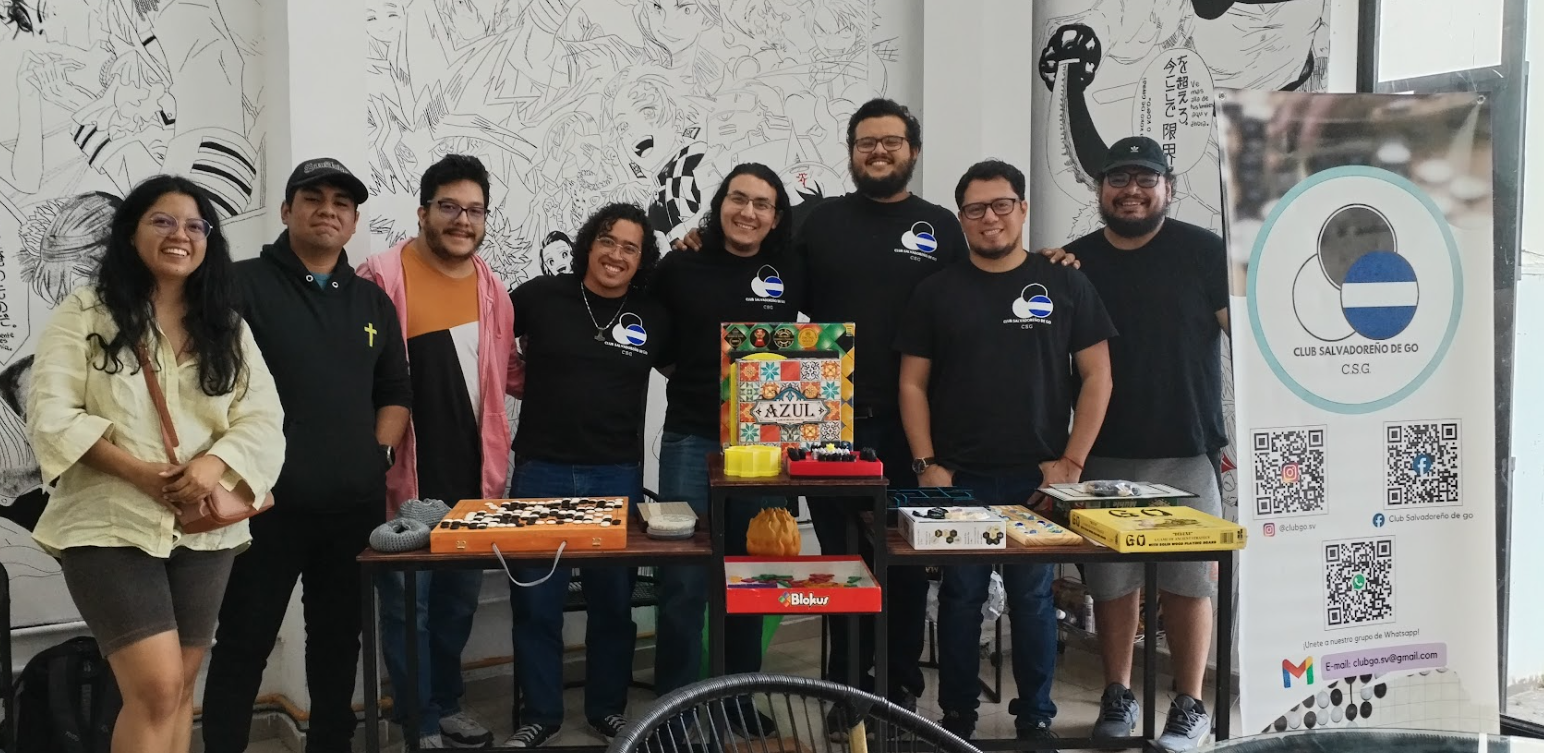
Gerardo and Diego invited more friends. They held their first Go meetup in a café in December 2023. They kept communicating with players from Costa Rica, who even organized small online lectures for them. Slowly, an idea that once felt impossible began to take shape: perhaps El Salvador could have a Go club after all.
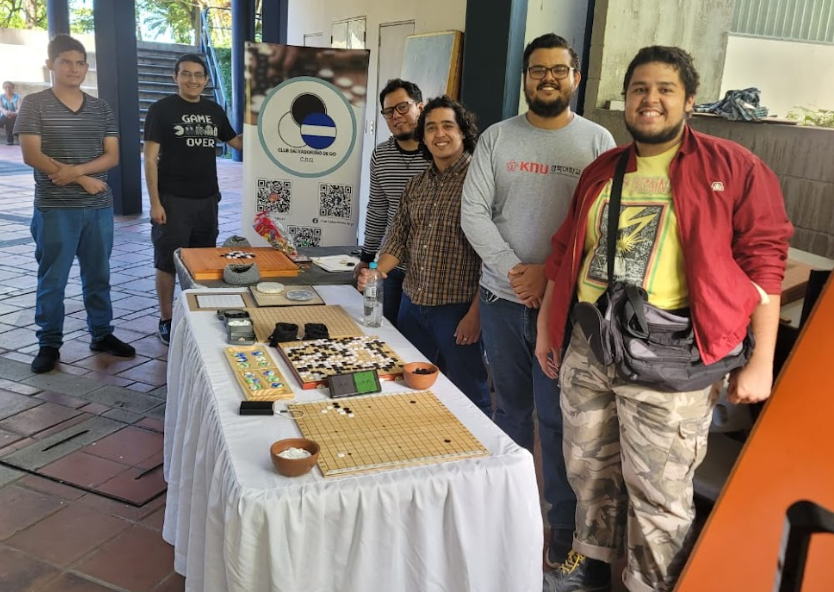
Next came online play on OGS, monthly meetups, and new members. The breakthrough came when they contacted the Confucius Institute at the University of El Salvador. The staff there were thrilled—finally, people who knew how to play Go! They had boards, but until then, they had only used them for Gomoku. Together, they organized events, including a Go exhibition booth during the “Chinese Language Day” celebration.
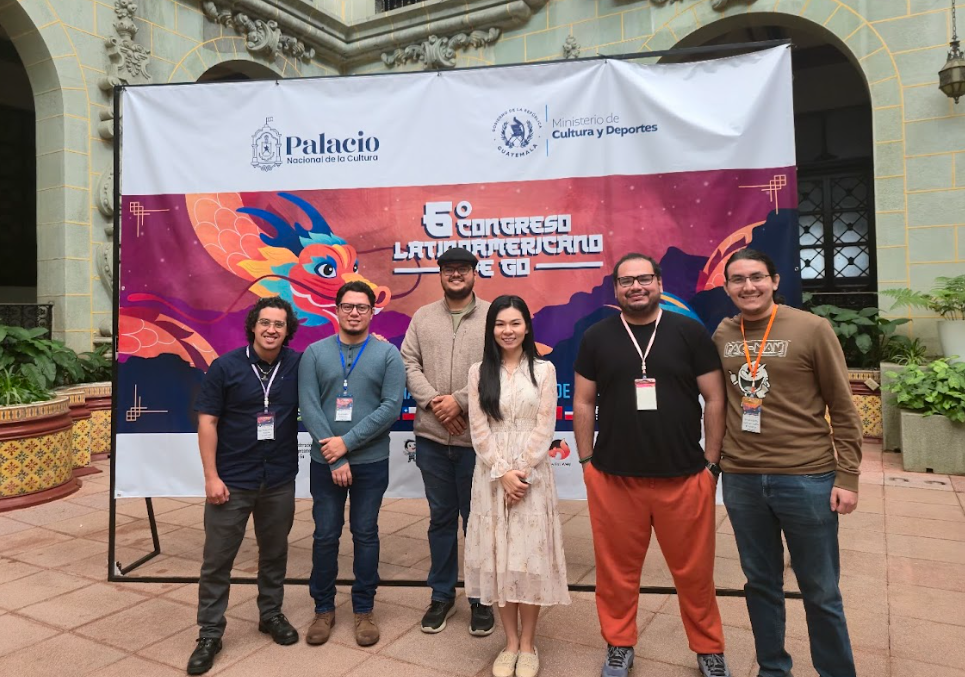
Today, the Go community in El Salvador is small but alive. They maintain ties with Guatemala, and this August they will visit their neighbors in person. The club currently has around 7–10 active members. Their skill levels are humble—OGS ranks ranging from 18–25 kyu—but their passion is unmistakable.
Their goals are clear:
to found an official Salvadoran Go Association
to participate in international tournaments
to put El Salvador on the global Go map
Gerardo holds dreams of his own:
to become a dan-level player, and one day, a Go teacher who spreads the beauty of the game further than he found it.
What makes his story particularly striking is this: he never loved chess, despite it being nearly universal in his country. But Go captured him instantly. To him, it is a paradox in perfect balance—simple yet profound, vast yet harmonious. Every finished game feels like a painting.
And perhaps that is what makes Gerardo’s journey so meaningful. Go did not arrive in El Salvador because of tradition, education, or national history. It arrived because one person saw beauty, carried it quietly for years, and finally chose to share it.
Beyond the board, beyond rankings, beyond victories,
this is the story of how Go began to breathe in a place where it had never existed before—
because Gerardo believed it could.