
Tony Li and the Rise of Go in New Zealand
During the Spring Festival period in 2018, the president of the New Zealand Go Association, Liu Ge, remarked that the best news for Go in New Zealand in 2017 was that Tony had arrived in Auckland. Tony, whose full name is Li Kaixuan, is originally from Tianjin. From a young age, he was known for his sharp intellect and was regarded as a gifted child. Influenced by his father, an enthusiastic Go lover, he developed an early passion for the game. Unlike many amateur Go enthusiasts who focus mainly on practical play and pay less attention to theoretical study, Tony surpassed the limitations typical of amateurs. Alongside frequent practical games, he diligently studied Go theory, read classic works such as The Thirteen Chapters of Go and periodicals such as Go World, and learned from contemporary popular schools of thought, including the “Chinese Style” and the “Cosmic Style.” With extensive practical experience and solid theoretical grounding, his strength increased rapidly, and he soon became a formidable amateur competitor.
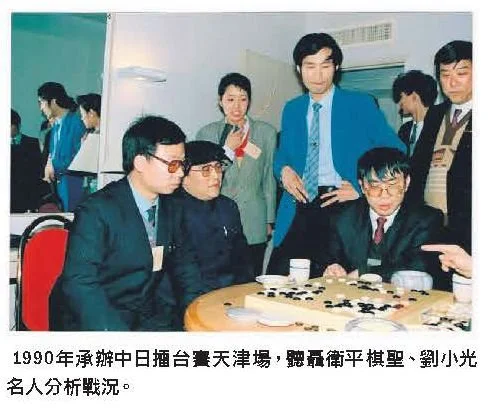
During the 1980s, Nie Weiping’s legendary victories over multiple Japanese 9-dan professionals in the China–Japan Go League produced a national wave of excitement and drew countless young people into the world of Go. In this cultural atmosphere, the Tianjin Sports Committee held the first Tianjin Amateur Go Dan Tournament. Tony participated and performed to his full potential, ultimately winning the championship. The result made him widely recognized in Tianjin’s amateur Go community. Seizing the opportunity, he mobilized his resources and connections to establish Tianjin’s first Go club, the Heping Go Activity Center. It offered Go lovers a regular place to play and exchange ideas and played an important role in advancing Go development in Tianjin.
In 1995, Tony moved to Shenzhen. There he continued to apply his Go ability and organizational skills, serving successively as the general manager of the Shenzhen Sanjiu Go Club and the general manager of the Shenzhen Go Academy. He led Shenzhen players in national amateur competitions such as the Evening News Cup and in the Chinese A League. During this period, he won the Shenzhen Celebrity Championship several times. In October 2003, at the fifth World Chinese Go Tournament—the Yanhuang Cup—held in Bangkok, Tony represented China, winning all five of his games and claiming the title.
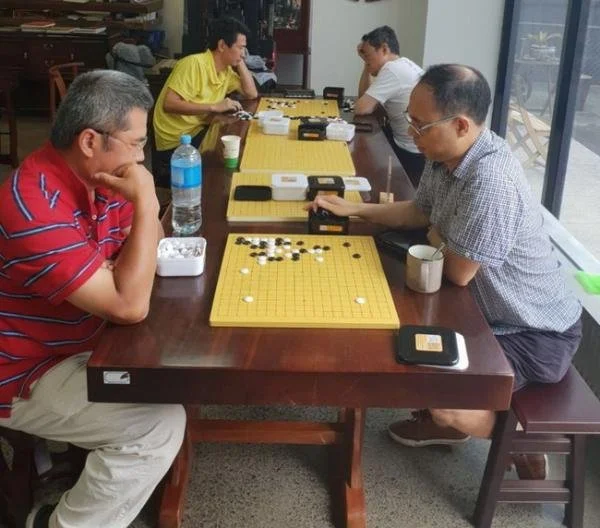
In 2017, Tony immigrated to New Zealand. With a population of only four million, New Zealand has few Go players, scattered across distant cities with limited resources, few playing opportunities, and almost no dedicated Go venues. Even in Auckland, the country’s largest city, Go enthusiasts could only borrow space from a chess club once a week. After less than a year in New Zealand, Tony observed the difficult state of Go development and felt deeply concerned. Drawing on the determination he had when founding Tianjin’s first Go club, he registered and established the New Zealand Go Institute, a pioneering initiative that surprised and delighted local players. Since its founding, the institute has become a regular gathering place for Go enthusiasts, offering daily play and weekly competitions. Go in Auckland entered a new stage of visibility and growth.
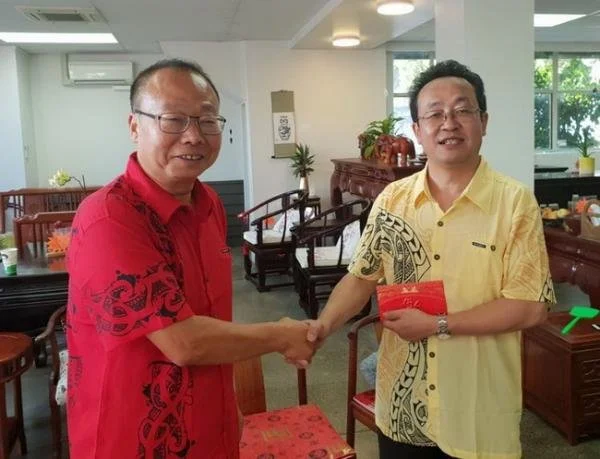
Beginning in June 2017, Tony organized monthly ranking tournaments, with players competing weekly and monthly champions determined by accumulated results. From June to November, he held five such tournaments. In addition to the monthly events, he partnered with Chinese businesses to host sponsored tournaments, including the “Hezhen Rosewood Cup” in November 2017, the “Wanguo Travel Cup” New Zealand King of Go Championship in December, followed by the “LvGou Cup” New Year Tournament and the “Aus–NZ Cup” Spring Tournament.
Former Chinese Ambassador to New Zealand, Xu Jianguo, once expressed hope that the Go community would promote Go and Chinese culture. Tony kept this encouragement in mind and devoted serious thought to expanding Go development. He believed that increasing awareness and exposure was essential for attracting more people to learn and enjoy Go, which would naturally enhance its influence. He contacted local media, including New Zealand Chinese Herald, Chinese Pages, and Mao Media, as well as Chinese online platforms such as Sina, Yike, Yicheng, and QQ Go, sharing New Zealand Go news with wider audiences and receiving strong feedback. On New Year’s Day 2018, the New Zealand Go Institute creatively hosted the first Go championship of the year worldwide, broadcasting live to a global audience and attracting significant attention while presenting a uniquely New Zealand expression of Go.
Tony’s playing style reflects the influence of the “Chinese Style” and “Cosmic Style,” favoring large-scale frameworks and demonstrating the ability to find vital tactical moves in quiet positions. In October and November, he won both the Auckland and Wellington Open Tournaments undefeated. Growing up in Tianjin, a city known for its comedic tradition, Tony possesses humor and charisma. He sends daily Go life-and-death problems and messages to players, and when a day passes without them, others feel something is missing. He jokes about being trapped by this expectation, and he refers to himself as someone who burns food when cooking and never wins at mahjong, yet spends his days reading Go records and recipes. During the “Hezhen Rosewood Cup,” with three rounds in a single day, he played while preparing meals for twenty participants. Players joked that his culinary skill was approaching his Go rank.
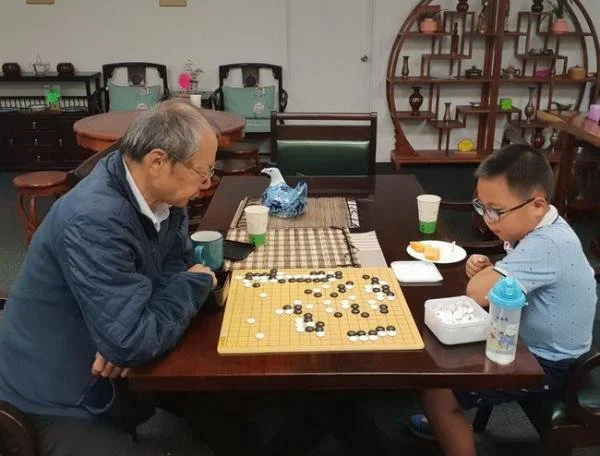
Tony emphasizes the importance of Go education and believes that training young players is essential for New Zealand’s future. He tirelessly seeks talent and teaches new learners. He posts daily Go poems, fun problems, and international Go news in the New Zealand Go chat group to help players improve. When discussing New Zealand Go’s recent growth, he acknowledges earlier contributors such as Du Shiyong, who laid the groundwork during difficult years, and sponsors such as Wang Xu and other devoted supporters.
Tony believes that New Zealand Go has already benefited from inviting strong players and is now preparing for team formats, pair Go, relay Go, and international participation, with an upcoming visit to Australia. In the future, he hopes to form teams to participate abroad and eventually host a world Go tournament in Auckland, fulfilling the dreams of generations of New Zealand Go players. Some New Zealand enthusiasts believe that Go must develop through a market-based approach, becoming a shared platform for the public, businesses, and fans. Tony has secured sponsorships from education exchange organizations, travel companies, woodcraft firms, logistics providers, and other enterprises, and believes Go could eventually contribute to industries such as dairy, health products, tourism, study abroad programs, immigration services, and real estate.
As artificial intelligence continues to evolve from breakthroughs first seen in Go, Tony believes that Go will bring more enjoyment and inspiration in the future, and that Chinese Go, with its deep origins, will thrive in New Zealand.